※ Above data has been tested in Korea at the constant temperature of 77℉~86℉(25℃~30℃)
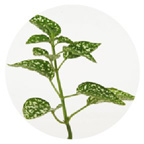
Polka-dot Plant
Botanical Name : Hypoestes phyllostachya
Flower Language : Endless love
Characteristics : Perennial plant, colorful leaves, as a tropical plant lives in high temperatures and shady environment
Growth Habit : Germination 5~12 days, Blooming 150~180 days (18℃~30℃, as a standard condition in Seoul from April to November)
Care : Asmuch sunlight as possible until leaves come out, pinch off buds at 4th or 5thjoint of a stem, seedlings should be culled.
Information : Hypoestes is a tropical plant native to Madagascarand has brilliant leaves and becomes more colorful in high temperatures andshady environment. As it does best in a humid environment, so occasionalmisting is helpful. The soil should be kept slightly moist. Germination beginswithin 5 to 12 days on a Blooming card, and it blooms after 5 to 6 months ofcare. Flowers appear on each gnarl’s petiole in turns and they resemble scarletsage. It lives for many years if it is kept inside during winter time. It isadvisable to keep it shaded and to pinch the buds at the fourth or fifth jointof a stem to ensure the plant becomes full and abundant. It is easy for acottage and it has a strong tolerance against dryness. Fluffy sides can be seenon a newly budded part during winter time.
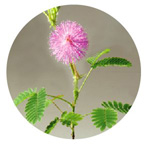
Humble Plant
Botanical Name: mimosa pudica
Flower Language : Shyness for touching
Characteristics :Popular for its movement at touch
Growth Habit : Germination 3~10 days, Blooming 150~180 days (18℃~30℃, as a standard condition in Seoul from April to November)
Care : As much sunlight as possible until leaves come out, pinch off buds at 4th or 5th joint of a stem, seedlings should be culled
Information : Mimosa originated from Brazil. It a tropical plant native to Madagascar and has brilliant leaves and becomes more colorful in high temperatures and shady environment. Germination can be observed within 3 to 10 days on a Blooming card, and leaves develop into shape after 15 days. It then shows a movement when touched and after 5 to 6 months of care, it starts blossoming with several flowers. As each flower lives for a day, flower buds take turns to blossom. It lives for many years if it is kept inside at a temperature of 15℃ or higher during winter time. It is advisable to pinch the buds at the fourth or fifth joint of a stem for the plant to be full and abundant. Frequent touching may cause stress for the plant resulting in death. As it shows weakness in dry conditions, extra care in watering is required. A lack of sunlight may result in death.
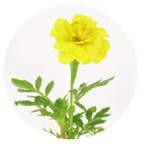
Marigold
Botanical Name : Tagetes erecta
Flower Language: Virgin Mary’s Golden Flower
Characteristics: Scatters away insects such as fly or mosquito
Growth Habit: Germination 3~7 days, Blooming 60~90 days (18℃~30℃, as a standard condition in Seoul from April to November)
Care : As much sunlight as possible, seedlings should be culled depending on the growth
Information : Marigold originated from Mexico and is fond of sunlight and tolerant of dry conditions. Also, it has sebaceous glands that scatter away insects such as flies and mosquitoes. Germination can be observed within 3 to 7 days on a Blooming card and after 2 to 3 month of care, it starts blossoming at the end of each stem and the flowers remain for 2 to 3 months. A seed’s hair can be seen on a Blooming card that resembles white feather. As herbaceous vegetation it lives for 6 to 9 months. High humidity may cause the stem to rot.
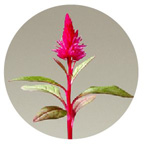
Candlelight Cockscomb
Botanical Name : Celosia cristata
Flower Language : Passionate Love as Candlelight
Characteristics : The flower resembles candlelight
Growth Habit : Germination 5~12 days, Blooming 60~90 days (18℃~30℃, as a standard condition in Seoul from April to November)
Care : As much sunlight as possible, seedlings should be culled depending on the growth
Information : Cockscomb originated from India. It has wide upper stems resembling a rooster’s cockscomb. Candlelight Cockscomb is an improved breed of conventional cockscomb with its flower resembling a candle light. Germination can be observed within 5 to 12 days on a Blooming card and after 2 to 3 months of care, it starts blossoming and the flowers remain up to 90 days. As herbaceous vegetation it lives for 6 to 9 months. It does not spread roots very deep, therefore a lack of sunlight may cause the stem to bend. High humidity also causes the stem to rot.
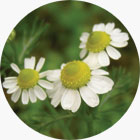
Chamomile
Botanical Name: Matricaria recutita
Flower Language : Love
Characteristics : Herb
Growth Habit: Germination 5~10 days, , Blooming 150~180 days(18℃~30℃, as a standard condition in Seoul)
Care : As much sunlight as possible.
Information : The name "Chamomile" is from Khamaimelon(=apple on the earth) and has been called as "moon herb" and "plant doctor" in Egypt. It hates high temperature and dry summer weather, but grows well under mild-dry condition. The flower smells like an apple, and its oil helps relaxingtension and keeps human body warm. The infused water from Camomile flower leaves helps revitalizing and curing the weak plants, and protecting plants from disease.
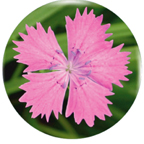
Chinese pink
Botanical Name: Dianthus chinensis L
Flower Language : Thanks
Characteristics : As much sunlight as possible.
Growth Habit : Germination 4~7 days, BloomingSpring season (15℃~25℃, as a standard condition in Seoul)
Care : As much sunlight as possible, seedlings should be culled depending on the growth
Information : Pink speaks that it is “Seokjukhwa” to meaning called "Bamboo flower of rock". Once upon a time, bad sprit lived in rock, a name is “Seokryeong”. Muscular man shot arrow to the rock. The arrow gets stuck to rock and flower that join. It is like bamboo bloomed. So, it was called “Seokjukhwa”. Grow spontaneously to Korea and China, and germination period is 4∼7 days, sprouting temperature is 15℃∼20℃ whole year. Flower runs 1 in defendant branch end for spring. Fruit has gotten wrapped by calyx of flower, and is split by 4 at end and ripens for autumn.
Morning Glory
Botanical Name : Ipomoea purpurea L.
Flower Language : Morning Glory
Characteristics : Only blooms in the morning, the flower is about the size of bellflower
Growth Habit : Germination 3~7 days, Blooming 60~90 days (18℃~30℃, as a standard condition in Seoul from April to November)
Care : As much sunlight as possible, seedlings should be culled depending on the growth
Information : Morning Glory originated from India and treated as annual plants of the family Convolvulaceae. As the name implies, the flower typically blooms around 3 to 4 am and lasts for a single morning and dies in the evening. New flowers bloom each day. Germination can be observed within 4 to 7 days on a Blooming card and after 2 to 3 months of care, it starts blooming and the flowers can be seen only during the morning. If its buds are cut around the 4th joint of stems, vines do not wither and stand erect temporarily. As herbaceous vegetation it lives for 6 to 9 months.
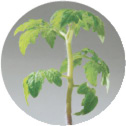
Tomato
Botanical Name : Lycopersicon esculentum
Flower Language : Love’s Green Scent
Characteristics : Strong scent of tomato during cultivation
Growth Habit : Germination 3~7 days, Blooming 90~120 days (18℃~30℃, as a standard condition in Seoul from April to November)
Care : As much sunlight as possible, seedlings should be culled depending on the growth
Information : Tomato originated from the highlands of South America. It tends to grow up to 1m but the size is adjusted to 15cm for a Blooming card. It has a weak tolerance for low temperatures and diseases at high temperatures during summer time. In order to bear fruits, separate nourishment must be provided. After germination, it can be kept inside.
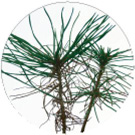
Pine Tree
Botanical Name: Pinus densiflora
Flower Language : Longevity
Characteristics : can be grown with dwarf trees
Growth Habit : Germination 20~30 days, (18℃~30℃, as a standard condition in Seoul from April to November)
Care : As much sunlight as possible
Information : Pine Tree’s leaves, flowers and resin have been used as the ingredients of tonic, dysentery and ointment medicine respectively. Also its flowerpot and bark have been used to make Korean traditional cake. In addition, it is widely used as building and pulp material while its turpentine is used for paint, varnish and synthetic camphor. People plant this tree for shade as well as decoration. It grows throughout the north-eastern part of China, Japan as well as the northern highlands of Korea.